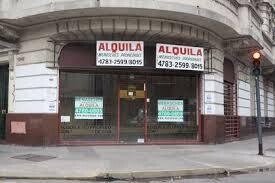
In the commercial real estate sector, this difference is interpreted as a signal that many owners prefer to try to lease the spaces first rather than definitively part with them. Behind this growing offer of empty premises appears the weakening of consumption, which continues to hit retail in Argentina. According to data from the Argentine Confederation of Medium Enterprises (CAME), retail sales by SMEs recorded a year-on-year drop of 5.6% in February. Many households prioritize basic expenses, look for promotions, and resort to financing to support their purchases, which hinders the recovery of sectors linked to discretionary consumption. The proliferation of empty premises in the City of Buenos Aires thus becomes one of the most visible indicators of this phenomenon. The most pronounced declines were recorded in bazaars, decoration, home textiles, and furniture, with a drop of 14.4%; perfumeries, with a fall of 10.7%; and food and beverages, with a decline of 8.7%. The only sector that showed a slightly positive result was pharmacies, with a year-on-year increase of 0.3%, which confirms that consumption continues to concentrate on goods considered essential. In this context, merchants and analysts agree that consumption remains very selective. The largest increases in the number of empty premises were recorded on Avenida Avellaneda, where the number of inactive establishments grew by 160%, and on Avenida Cabildo, with a jump of 177.8%. Significant increases were also observed on Avenida Santa Fe, with an increase of 75.8%, and on Avenida Rivadavia, where the rise was 28.6%. The analysis of premises offered on the market—those for rent or for sale—shows a particular dynamic. The figure implies an increase of 38.5% compared to the same period in 2025 and a jump of 43.4% compared to the previous survey, corresponding to November and December of last year, when 198 inactive establishments had been counted. The data reflects the continuing impact on retail trade of the fall in consumption, the pressure of operating costs, and the difficulty for many businesses to sustain rents and structure in high-traffic commercial areas. The report also allows one to observe in which areas of the city the largest number of shutters are down. Avenida Corrientes heads the list with 68 empty premises, followed by Avenida Rivadavia, with 63, and Avenida Santa Fe, with 58. In the case of rentals, the available offer registered a strong expansion: it increased by 158.8% compared to the January-February bimonthly period of 2025 and by 91.3% compared to the end of last year. In contrast, premises for sale presented a more moderate behavior. A survey by the Argentine Chamber of Commerce and Services (CAC) detected 284 premises for sale, for rent, or directly closed during the January-February bimonthly period in the main commercial corridors of Buenos Aires. Although they increased by 12.5% in the year-on-year comparison, they recorded a 25% drop compared to the November-December 2025 survey. In the accumulated total of the first bimonthly period of 2026, the sales decline was 5.2% compared to the same period last year. The sectoral report also showed that a significant portion of merchants perceive a deterioration in their situation. Although a slight improvement of 2.6% was observed in the monthly comparison compared to January, the result was not enough to reverse the negative trend. 38.8% of the owners consulted indicated that their activity had worsened compared to the previous year, while 52.6% stated that their situation had remained stable. The behavior of consumption also varies by sector. Further behind are the pedestrian Florida Street, with 22 inactive establishments, and Avenida Córdoba, where 15 closed or premises available for rent or sale were counted. These are some of the most emblematic commercial corridors of the Argentine capital, historically characterized by their intense pedestrian traffic and the presence of bookstores, restaurants, theaters, clothing stores, and traditional businesses. The survey also detected significant variations from one bimonthly period to another in different commercial poles of the city. Every closed shutter reflects not only a business that has ceased to operate, but also the tensions that urban commerce is going through in an economy where the recovery of consumption still appears as one of the main challenges. Buenos Aires - March 10, 2026 - Total News Agency - TNA - The commercial postcard of the City of Buenos Aires again showed signs of deterioration at the start of the year.